
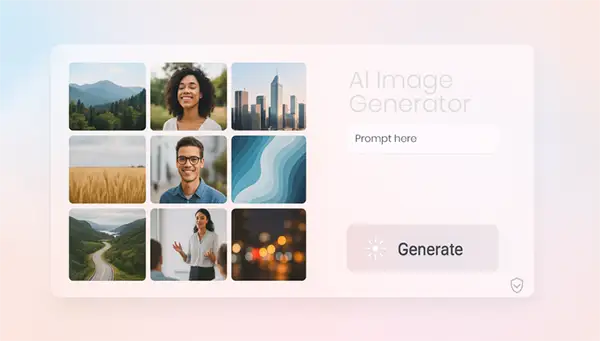
AI image generation is changing the future of Stock Images. From royalty‑free images to brand‑safe visuals, the future of stock photos is hybrid—curated libraries plus on‑demand generation. Here’s how stock photo websites, creators, and marketers can win—legally, ethically, and profitably.
Why the stock photo world is changing now
This is one of those “tectonic shift” moments in creative tech, and the future of stock image portals is going to be fascinating (and a bit rocky). I’ll share what I see happening, what challenges lie ahead, and what opportunities exist — and you (as a digital marketer / creator) can spot where to position yourself smartly.
The current disruption
Before jumping to the future of Stock Images, it helps to understand what’s shaking things now:
AI image generation is improving fast
Tools like MidJourney, DALL·E, Stable Diffusion, etc., are producing high-quality visuals from text prompts. That gives designers an alternative to “searching & licensing” — they can just “generate & tweak.”
Stock platforms are already adapting
Many stock sites now accept AI-generated content, or build AI tools inside their platform to help users customize or remix imagery.
Consolidations & mergers
Getty Images and Shutterstock decided to merge, partly as a strategic hedge against AI’s pressure.
Tension around licensing, ethics, copyright
Who “owns” an AI-generated image? What about using existing stock images to train AI? These legal and ethical debates are intensifying.
So stock image portals are not going extinct overnight — but their role is shifting.
What the future of Stock Images may look like
Here’s my projection for how stock image portals evolve (let me break it down by challenges + opportunities):
Challenges & pressures
Commoditization of imagery
As AI can generate many of the standard, “generic” stock visuals (office desks, people working, nature scenes) instantly, those kinds of simple visuals lose their premium value. The supply is virtually unlimited.
Value shift to uniqueness, style, and curation
Stock portals will compete less on “lots of images” and more on “distinctive aesthetic, exclusive collections, curated styles, or niche expertise.”
Legal / IP risk & compliance burden
To stay trusted, stock platforms must ensure that their images (especially AI ones) don’t infringe on copyrights or generate “derivative” content that’s contentious. That legal cost and trust-building will be a major filter.
Erosion of contributor incentive
If contributors believe their work is feeding AI models without fair reward, or that AI will outcompete them, they might reduce participation. (Some studies already show contributors pull back when their work is used for AI training)
Reduced pricing power
As alternatives (AI tools) become cheaper and more flexible, traditional licensing models (per-image, per-seat subscriptions) will feel expensive by comparison. Stock platforms might struggle to maintain margins.
Opportunities & new directions
Hybrid models: AI + curated library
The future winners will blend: a core library of curated, premium photos + AI-generation options customized by style, mood, brand guidelines. So the stock platform becomes a creative assistant, not just a “bank of images.”
Niche, themed, and hyper-specialized collections
Instead of “generic business people,” we might see exclusive, culturally nuanced, stylistically bold collections that AI cannot (yet) replicate perfectly. E.g. region-specific, subcultures, local flavor, storytelling-driven imagery.
Customization, remix, “variations” as product
Stock portals might sell “variation licenses” — e.g. “Give me 5 stylistic versions of this image,” or “adapt this image to brand palette / mood / color tone.” The idea: the user gets stock plus a generative remix function.
Prompt / style marketplaces
Instead of (or alongside) images, platforms could sell high-quality prompts, style templates, or “prompt packs + stylization filters.” Designers buy a “look” and generate dozens of images from it.
Branded / enterprise-first solutions
For big companies, stock portals may become “brand asset factories.” You’ll get a tailored image generator that ensures brand consistency, with vetted rights management and legal guarantees.
AI licensing & rights infrastructure
Portals might evolve into rights / provenance authorities: verifying the origin of images (human-made vs AI), embedding metadata, tracking usage, and certifying “safe-to-use” status. Trust becomes a differentiator.
New revenue models
- Subscription + credits hybrid
- “Generation credits” (pay per AI render)
- Premium tiers for higher resolution, exclusive styles
- Enterprise / API integrations with creative tools and marketing suites
My take: what happens the future of Stock Images
- Stock image portals won’t disappear — they’ll reposition.
- Their value will shift from “mass library access” to “creative authority, curation, rights assurance, and hybrid AI tools.”
- The ones that survive are those who adapt: build AI capabilities, create strong communities of creators, and focus on trust, licensing, and differentiation.
- Many small contributors or casual users may migrate entirely to AI tools. But for commercial use (ads, campaigns, brands), trust + legal clarity + uniqueness will still favor portals.
Let’s look at a 10-year timeline (2025–2035) for the future of stock image portals in the age of AI image generation, mapped decade-style, with realistic milestones, market behavior, and opportunities for creators and digital marketers like you.
This is written in an analytical yet conversational tone — just how you like it: human, simple, insightful, and forward-looking
The 10-Year Future of Stock Image Portals (2025–2035)
2025–2026: The Hybrid Phase Begins
“Stock platforms become AI-assisted creative partners.”
- AI image tools (MidJourney, Leonardo, DALL·E, Ideogram, etc.) are now mainstream.
- Designers mix AI + stock photos for faster workflows — “generate + blend” replaces “search + edit.”
- Big portals like Shutterstock, Adobe Stock, Freepik begin embedding AI generation inside their platforms.
- Many small stock portals either:
- Rebrand as AI-first image platforms, or
- Die due to lack of differentiation.
- Trust becomes a keyword — portals start tagging “AI-generated,” “human-photographed,” or “mixed.”
- Early “prompt marketplaces” emerge — selling pre-trained styles, brand palettes, or visual aesthetics.
Opportunity:
Creators who combine authentic human photography + AI enhancement thrive.
Portals that offer brand-safe, copyright-verified content build loyal user bases.
2027–2028: The Era of AI Customization
“The search bar becomes a conversation.”
- Image generation becomes conversational and contextual — you describe, refine, and regenerate in real time.
- Stock portals integrate AI brand models — you can tell the platform your brand mood, tone, and color, and it generates all matching visuals.
- Subscription models evolve: users buy AI credits, not just image licenses.
- Contributors begin uploading AI-trained style packs instead of photos.
Example: “Japanese minimalist lifestyle” style pack you can use across images. - Corporate clients pay for “exclusive generation zones” — AI trained on their brand aesthetics.
Opportunity:
Digital marketers can license their brand’s visual DNA — consistent look across campaigns, all generated within the portal.
Stock image creators pivot to AI style curators.
2029–2030: The Trust & Rights Revolution
“When every image looks perfect, authenticity becomes rare.”
- Deepfake concerns and copyright lawsuits explode.
- Governments and creative guilds push for AI provenance systems — blockchain-based “Image DNA.”
- Stock portals become trust authorities: each image carries a “verified origin seal.”
- Human-captured and culturally rich content gains high value.
- Specialized portals emerge:
- Cultural stock portals (authentic regions, rituals, faces).
- Ethical AI stock portals (legally clean training datasets).
Opportunity:
Ethical content creators, photographers, and agencies build niche verified archives — legally safe, culturally rich, and AI-ready.
These portals charge premium prices for trust.
2031–2032: The Creative Ecosystem Convergence
“From stock images to branded visual ecosystems.”
- Portals integrate with design suites (Figma, Canva, Photoshop AI, etc.) seamlessly — no need to “download” anything.
- AI personalization reaches maturity — stock portals auto-generate visuals tuned for:
- Target audience psychology
- Platform (LinkedIn post, Instagram ad, blog thumbnail)
- Brand voice and region
- Contributors evolve into AI brand visual consultants — selling “visual systems,” not files.
- Community features grow — creators and AI collaborate in shared spaces, remixing and co-creating.
Opportunity:
Agencies and freelancers like you can create “AI Brand Packs” — a collection of prompts, brand color models, and visual guidelines sold on portals.
Essentially, you sell brand identity systems powered by AI.
2033–2035: The Immersive Era
“Stock images evolve into dynamic visual experiences.”
- Static photos are old news — AI-generated micro-videos, 3D scenes, AR environments become the new stock format.
- Portals shift to multimodal stock: images, audio, motion, and virtual space assets.
- Metaverse marketing and AR/VR branding dominate premium content demand.
- AI co-creation becomes hyper-personalized — your portal knows your content style, audience, and campaign goals before you type a prompt.
- Stock content merges with AI video generators (like Sora 2.0, Runway 5, Pika 3) to deliver “ready-to-use motion visuals.”
- Human artistry resurges — real photographers and illustrators are celebrated for authentic emotion and imperfection.
Opportunity:
Stock portals will evolve into “Experience Marketplaces.”
Brands and creators will license dynamic scenes instead of images.
Creators who blend human storytelling + AI artistry + motion design will dominate.
Summary Table: The Future of Stock Images
| Year | Phase | Defining Shift | Winning Strategy |
| 2025–26 | Hybrid AI Adoption | AI inside stock sites | Combine human + AI visuals |
| 2027–28 | Customization Era | Brand-specific generation | Sell AI style packs |
| 2029–30 | Trust Revolution | Legal, ethical, verified assets | Build authentic niche libraries |
| 2031–32 | Ecosystem Convergence | Integrated creative workflows | Offer AI brand packs / systems |
| 2033–35 | Immersive Future | 3D, motion, and AR stock | Create dynamic experiences |
Final Thought
The future of Stock Images portals aren’t dark— they’re evolving into AI-powered creativity ecosystems.
The future won’t belong to those who sell images, but to those who sell identity, authenticity, and trust.
- As a digital marketer and creator, your smartest move is to:
- Position yourself early in AI-integrated visual storytelling,
- Build niche, culturally relevant image collections,
And maybe even launch your own micro-stock platform — one that curates AI + human creativity for ethical, brand-safe use.
- Shift from pure search to hybrid “search + generate” workflows.
- Invest in style systems: consistent looks beat one‑off images.
- Use verified provenance/CAI‑style tooling where available for brand safety.
- License clearly: document prompts, models, and usage rights for commercial use.
- Create (or buy) prompt packs and style presets for repeatable results.
FAQs
Q: Are AI‑generated images safe for commercial use?
A: Yes—if you follow the license terms of the model, the platform, and any stock portal you use. Avoid copyrighted prompts and use brand‑safe, rights‑cleared workflows.
Q: What will happen to traditional stock photo websites?
A: They’ll evolve into AI creativity hubs—curated libraries plus on‑demand generation, trust labels, and enterprise compliance features.
Q: How do I keep visuals on brand?
A: Build a style system with palettes, typographic overlays, and prompt presets. Use custom models or style references for consistency.
Q: What’s the biggest legal risk?
A: Ambiguous licensing. Always read the terms, save audit trails, and prefer platforms with provenance and clear IP assurances.